


The Spinola Hours
The Crown Jewel of Flemish Book Illumination
The Masterpiece of Flemish Book Art
Discover the Spinola Hours, a seminal work of European art history and the absolute pinnacle of Flemish book illumination from the beginning of the sixteenth century.
Created circa 1510–1520 in Ghent or Bruges, this magnificent manuscript unites the best of Late Gothic and Renaissance painting.
For good reason, Thom Kren, former curator of manuscripts at the Getty Museum, described it as “the most visually ambitious and highly original Flemish manuscript” of its age.
Faksimile-Edition
The Spinola Hours: The Manuscript
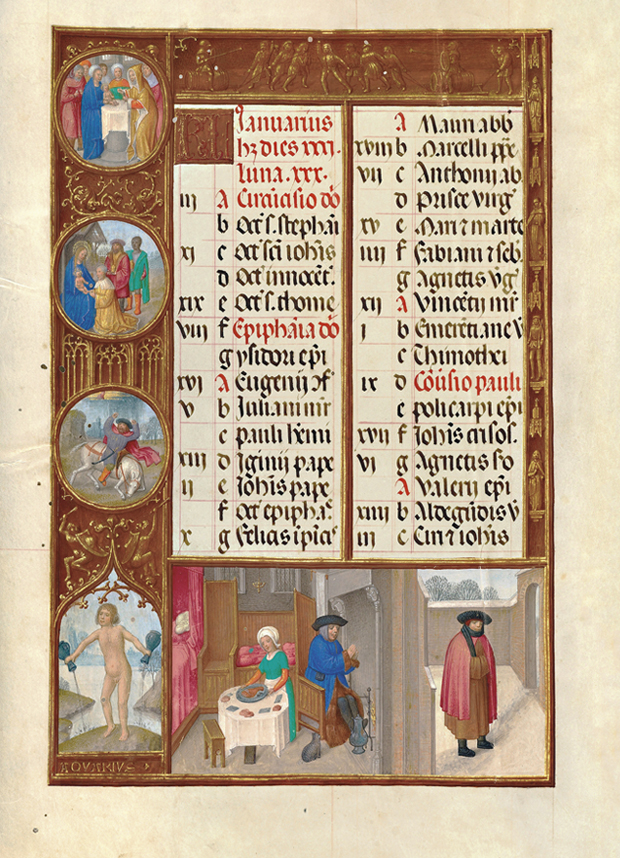
The Spinola Hours, fol. 1v
Created by the very greatest masters
A true “dream team” of book illumination created this incomparable work of art. Five of the most prominent artists, including the famous Master of James IV of Scotland (possibly Gerard Horenbout), worked on the 624-page codex.
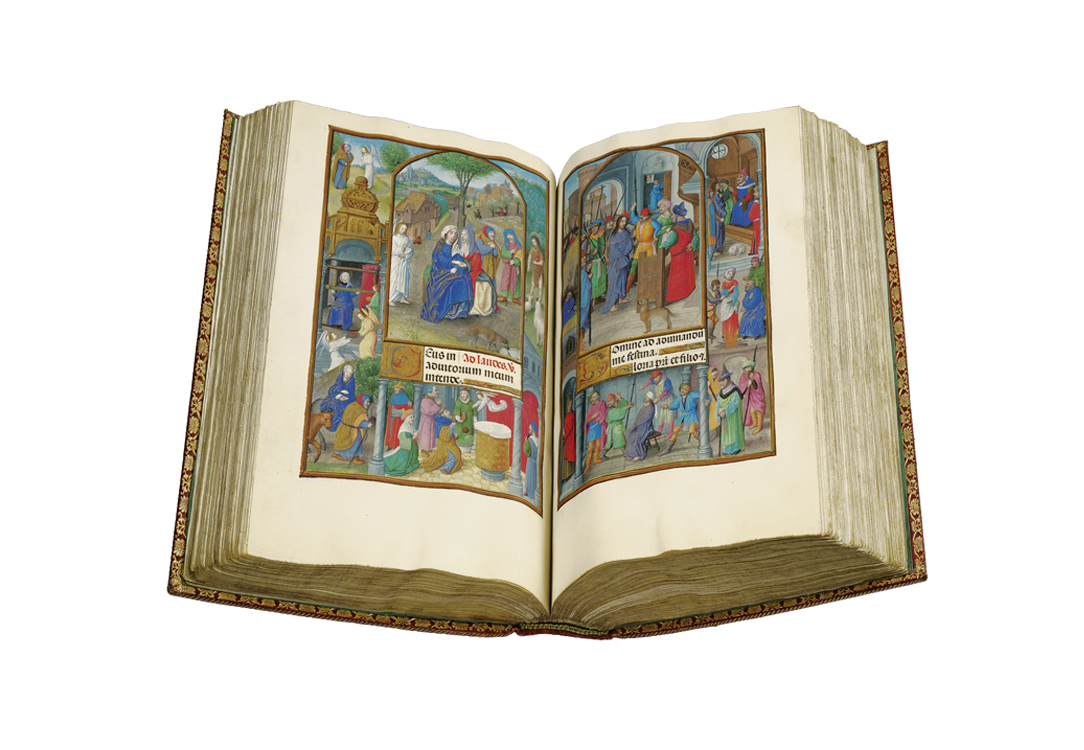
Their ingenious compositions, which integrate the text into the images in a unique way, and the imaginative borders make every single page a visual feast.
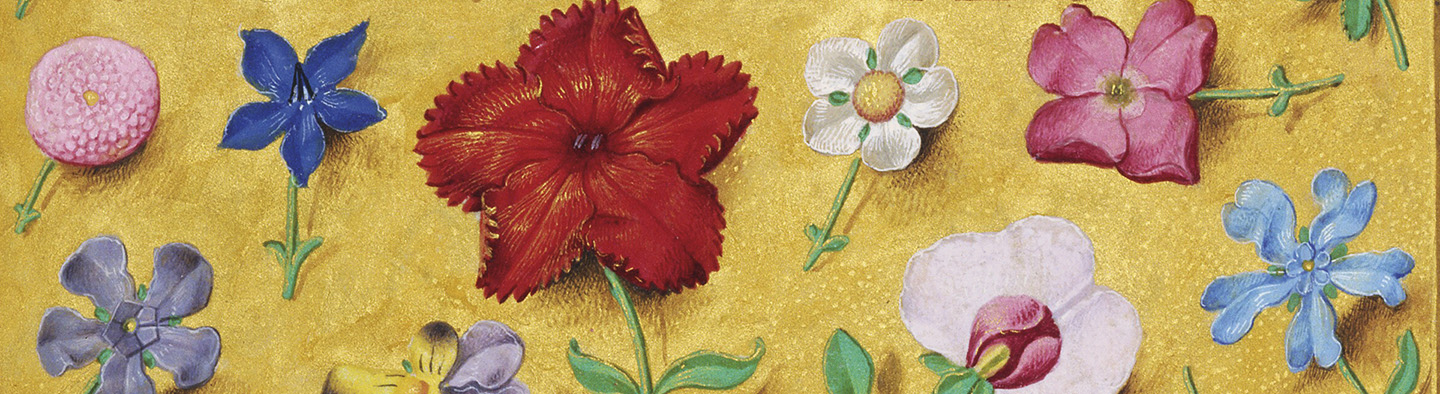
Illusionistically painted birds, insects, and flowers seem to spring directly from the parchment. Not a single page remains without decorative ornament.
A Legendary History
The book owes its name to the Genoese noble Spinola family, who owned it later.
Appearing as if from nowhere, it caused a sensation at a 1976 auction when it was sold for a record sum.
The famous manuscript dealer H.P. Kraus secured this work and later sold it to the collectors Irene and Peter Ludwig.
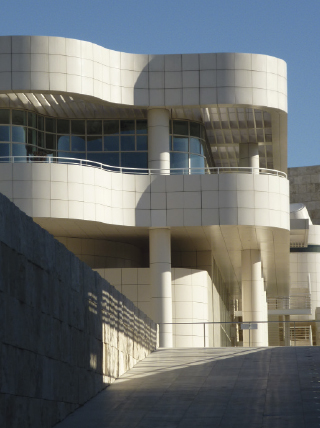
Today, the original is one of the priceless highlights in the collection of the J. Paul Getty Museum.
A Homage of the Highest Perfection
On 624 pages measuring 23.2 x 16.6 cm, all 88 vibrant miniatures and the countless gold-decorated pages are perfectly reproduced with exquisite detail.
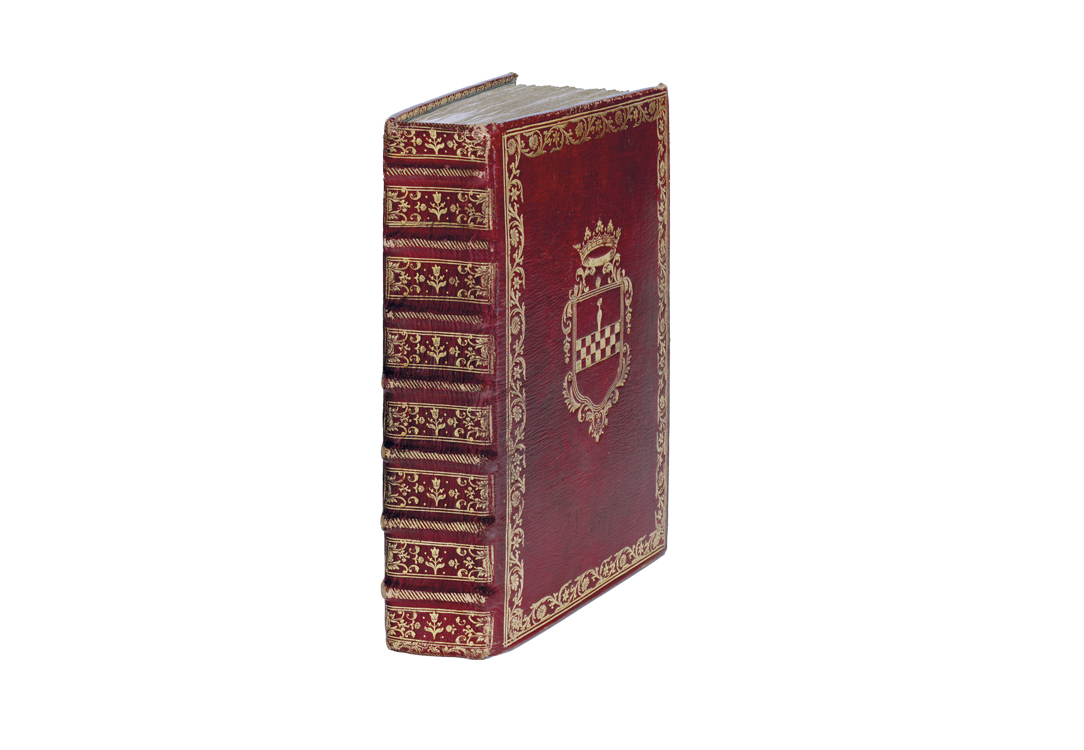
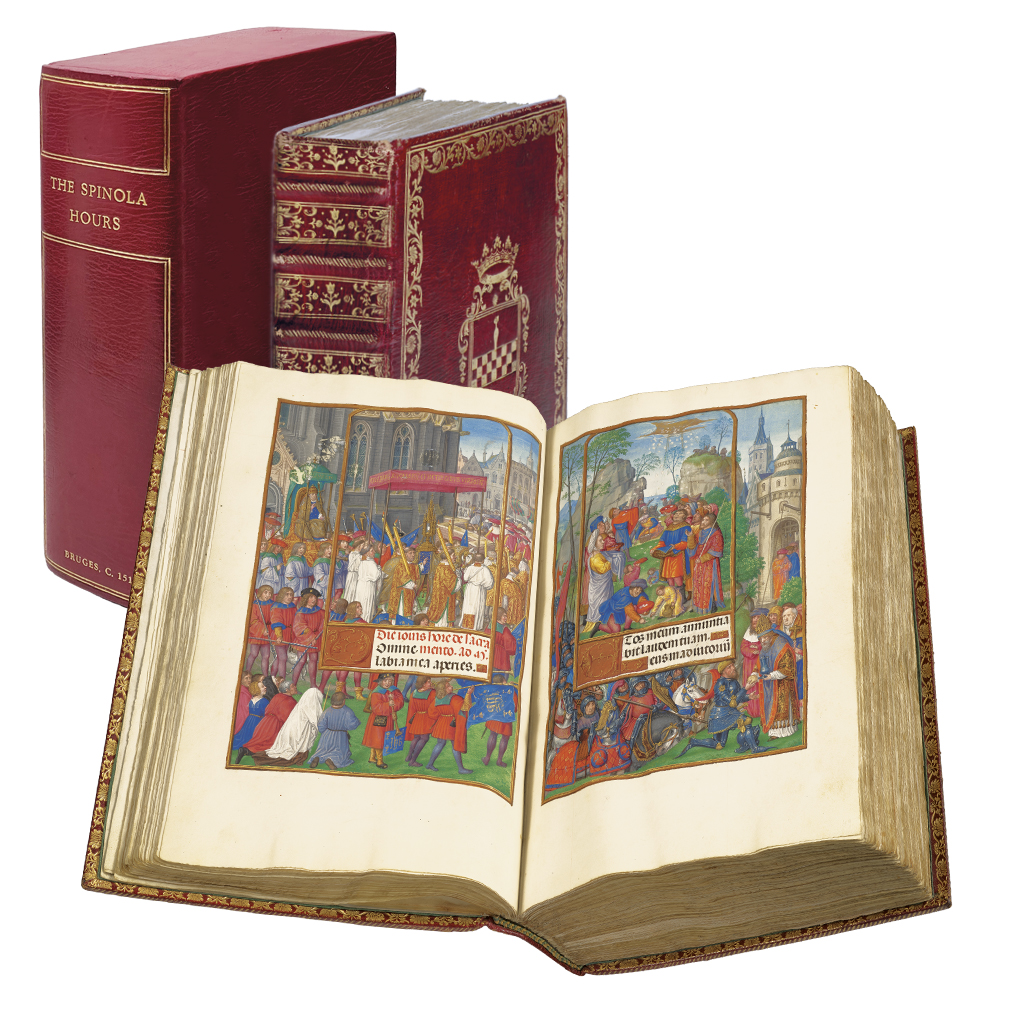
The fine, radiant gold, the vivid colors, and the luxurious hand-crafted leather binding—modeled after the 16th-century original—make this unique, timeless edition a truly sensory experience.
Under the Magnifying Glass
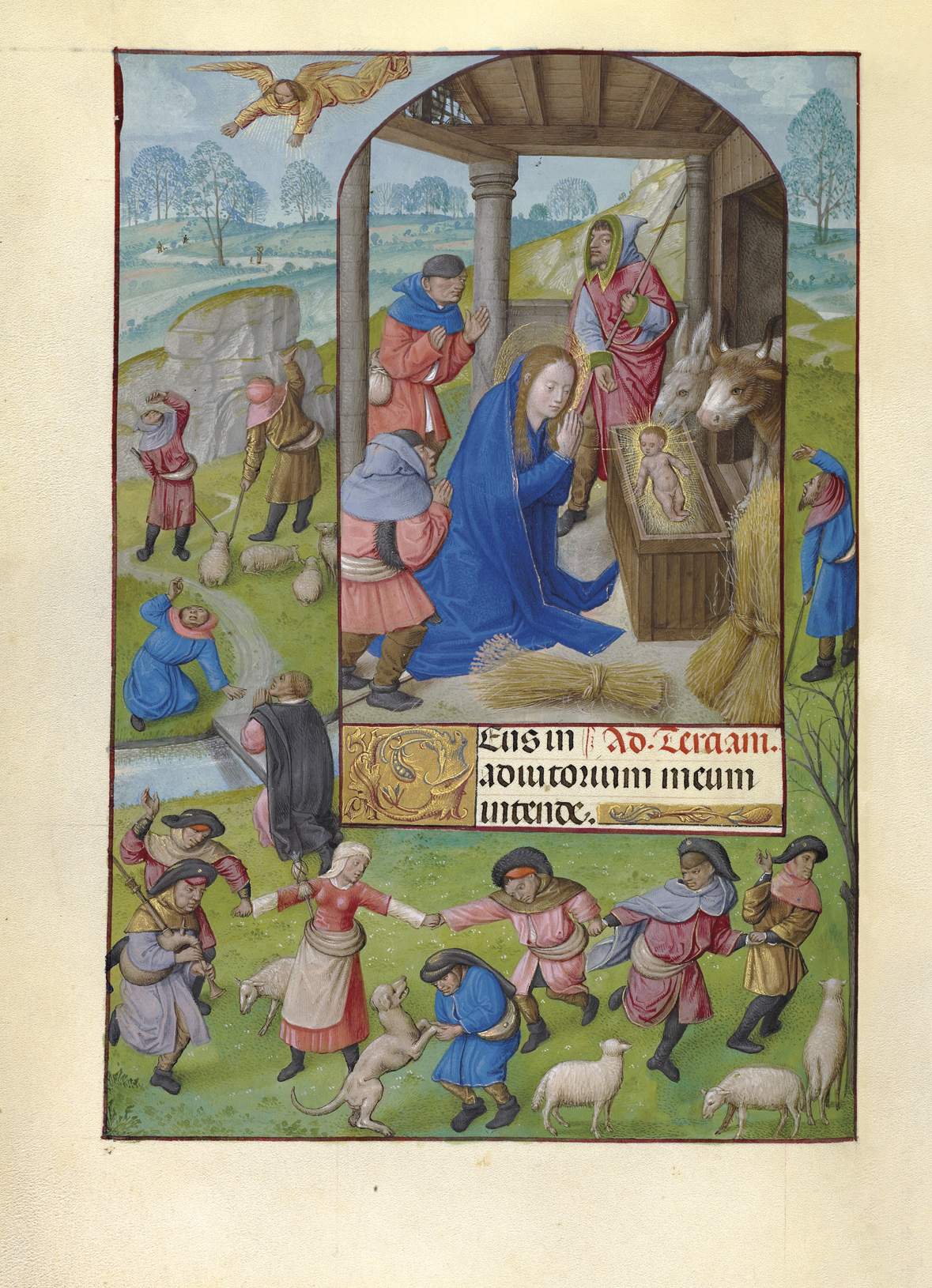
The scene is set in a dilapidated barn, whose damaged roof and missing side walls allow for wide views. The illuminator uses this architectural openness for a major design innovation: the landscape of the main image merges seamlessly into the border scenes. This device, which dissolves the rigid separation between the central field and the border, was first tested consistently here in the Spinola Hours. It is a pioneering example of the development of a coherent, unified pictorial space in Flemish book painting.
In the lower border, the narrative continues joyfully: here, the shepherds are seen in a lively, spirited dance, cheered on by a bagpiper who vivaciously sets the beat for them. The detail is lovingly crafted: while even the sheepdog joins the celebration with joy, the sheep remain true to their nature and watch the spectacle with a deep sense of quiet and calm indifference.
The Spinola Hours: The Edition
The Manuscript and the Facsimile at a Glance
The Spinola Hours (c. 1510/20) is the quintessence of Flemish book art. Created by the five greatest artists of their time, it embodies the peak of illumination.
Manuscript: Los Angeles, J. Paul Getty Museum, Ms. Ludwig LX 18
Date of Origin: c. 1510/20
Place of Origin: probably Bruges or Ghent
Format: approximately 23.2 x 16.6 cm
Extent: 624 pages (312 folios)
Artists: Master of James IV of Scotland (often identified as Gerard Horenbout), Master of the Prayerbook of Maximilian I, Master of the Dresden Prayerbook, the Master of the Lübeck Bible, and the Master of the Prayerbooks of around 1500.
Patron: probably Margaret of Austria
Features: 88 miniatures with countless individual scenes and imaginative border decorations on every page.
Binding: Red leather binding with gold embossing.
Commentary Volume for the Edition: Written by Lieve De Kesel (Ghent University, specialist in Flemish illumination). Her study explores the manuscript’s production in the Ghent-Bruges region, the participating artists and workshops, the complex iconography of its miniatures, its textual components and their liturgical history, as well as its ownership and provenance.
Print Run: 480 copies
The facsimile edition will be released in winter 2026.
Faksimile-Edition
A few pages to flip through:
A Look Inside the Facsimile Manuscript
On folios 5v–11r, We see in the first place the calendar pages for October to December, before the Spinola Hours reveals its first large-format miniatures: the Carrying of the Cross with Veronica and the Sudarium is paired with the figure of Christ Blessing.
Through some finely crafted text pages, the cycle continues to the Holy Trinity, surrounded by the heavenly hosts. This is juxtaposed with its Old Testament prefiguration, namely the depiction of Abraham with the Three Angels.
A fascinating detail is provided by the text citations, which appear like scrolls of writing fastened to the parchment.
Faksimile-Edition
A Challenging Production: fac simile
Perfect photography is essential
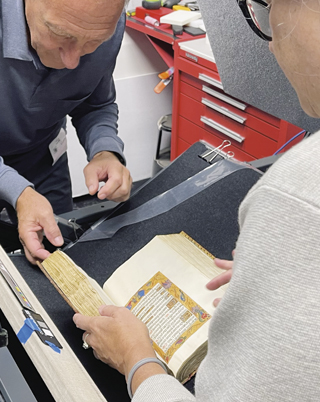
The photographs are among the most important factors for the quality of a facsimile edition.
In the studios of the Getty Museum, the photographer of Quaternio Verlag Luzern worked with the Getty team to create optimal images.
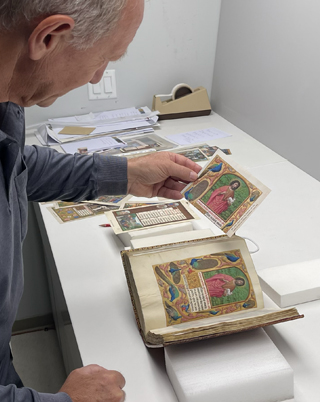
Every page is compared
For a facsimile edition truly to deserve the designation faithful to the original, each printed sheet is carefully compared with the manuscript itself. Even the smallest colour deviations are thus identified and corrected.
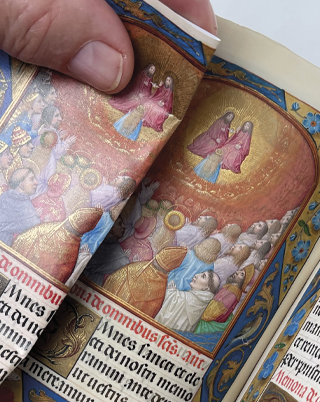
Fine shell gold on every page
The Spinola Hours is decorated throughout with shell gold. Reproducing this fine gold faithfully is a major challenge for the lithographers.
Point by point, stroke by stroke, it must be traced on the computer and then compared with the original.
Faksimile-Edition
The Facsimile Folder for the Edition
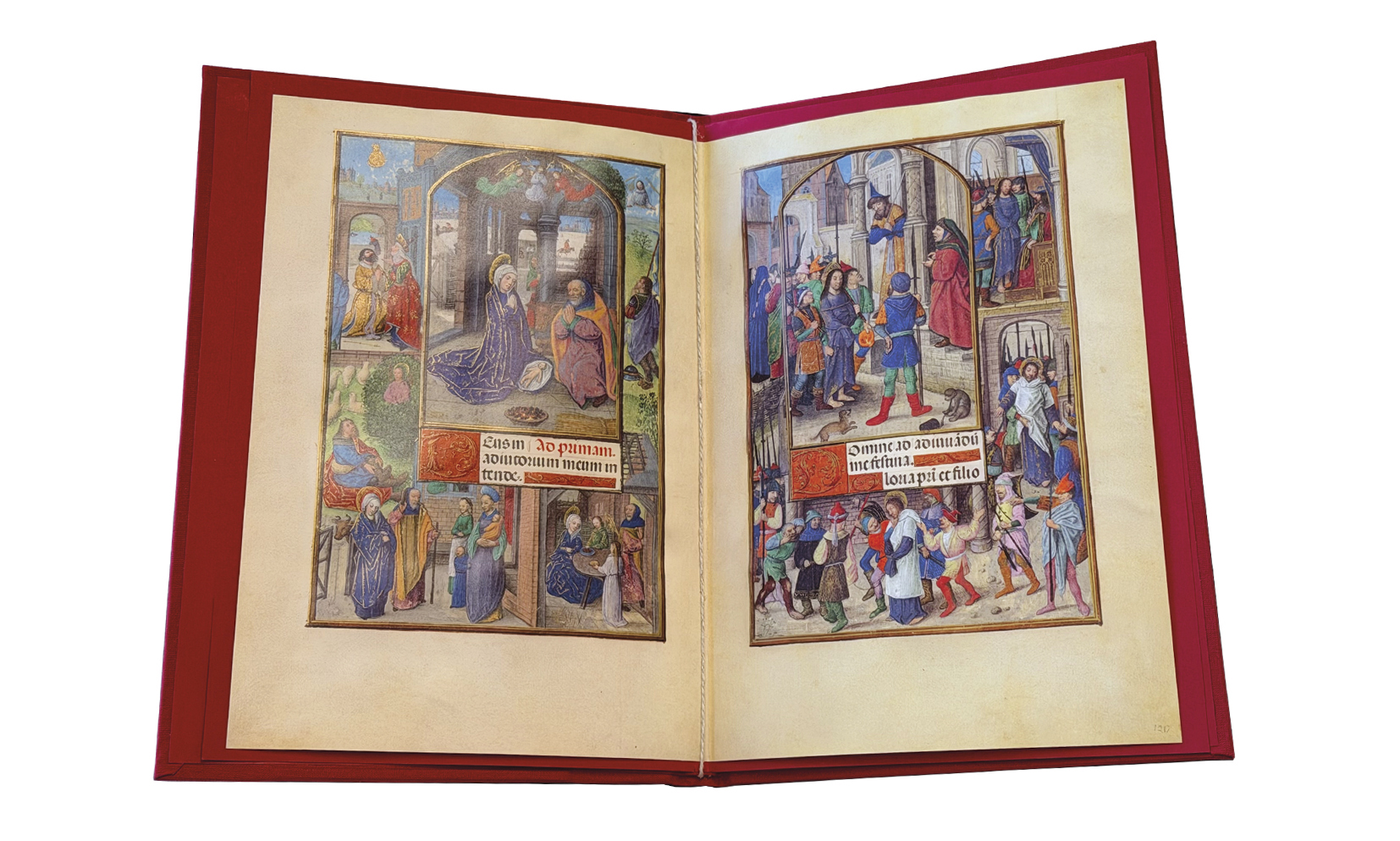
- An original facsimile sheet (folios 119–120) featuring the principal scenes Nativity of Christ and Christ before Caiaphas, together with numerous subsidiary scenes
- Handcrafted linen facsimile folder in a format of 18 × 25 cm
- Accompanying brochure in the format of
18 × 25 cm, 80 pages, including an extensive essay on the manuscript by Christopher de Hamel and a detailed description of the facsimile pages by commentary author Lieve De Kesel.
The Wigalois by Wirnt von Grafenberg